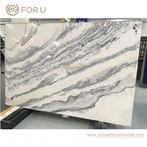
Let's start with the basics: what is a porcelain slab?
Porcelain slab, also known as "sintered stone," is a novel type of large-scale porcelain material that can endure the cutting, drilling, and grinding processes. The sintering of porcelain slabs is a difficult procedure. The natural stone and inorganic clay are squeezed together in a 10,000-ton press, then sintered at over 1,200°C. The thin, large-size high-tech veneer is manufactured using NDD technology.
What are some of the reasons for porcelain panels' popularity?
Good performance: It still has a significant performance advantage because of its extensive specifications, thin and light body, high hardness, high-temperature resistance, acid and alkali resistance, and ease of cleaning.
High value: The natural and clear texture, shifting hues, and texture are comparable to natural stone, providing natural beauty.
Porcelain slabs can be used for a variety of indoor and outdoor decoration purposes, including tabletops, worktops, furniture, engineering outdoor areas, and so on.


Finally, I'd want to discuss the potential for porcelain slab development. Many people may be asking how long the popularity of porcelain slabs in the plate market will remain, and whether they can ever outperform tiles. I don't believe there is any certainty, but the advantages of the porcelain board are evident, and it has also broken through many constraints of the tile, where the tile may be adorned, the porcelain board can decorate practically everything, and the application field is quite broad. I believe I have caught up with the early train of porcelain slabs because it appears that all of the main brands are also performing novel research in this area of porcelain slabs, a range of advanced R & D production technology. I saw it two days ago. The porcelain slabs have now grown to 6100mm in length.